Intelligence Briefing
- Production Expansion: A-1 Pictures has reportedly allocated a 40% higher per-episode budget for Season 2: Arise compared to the first cour.
- Technical Innovation: The integration of 3D-assisted background rendering with traditional high-octane 2D action sequences.
- Narrative Scope: Season 2 will cover the pivotal Red Gate and Demon Castle arcs, setting the stage for the Jeju Island finale.
- Soundtrack Evolution: Hiroyuki Sawano returns with a score utilizing more industrial-electronic elements to match the Monarch's growth.
In the high-stakes world of modern anime production, few titles carry the weight of expectation quite like *Solo Leveling*. When the first season concluded in early 2024, it wasn't merely a success; it was a cultural phenomenon that validated the massive investment in Korean Manhwa adaptations. As we move into the 2026 broadcast cycle, the arrival of Season 2: Arise represents a significant technical and narrative leap. We are no longer observing a weak hunter struggling for survival; we are witnessing the emergence of a god-like entity, and the technical requirements to render that power are immense.
Overview: The Cultural Pivot of Manhwa Adaptations
The success of *Solo Leveling* has forced the Japanese animation industry to reconsider its approach to webtoons. Historically, adaptations like *Tower of God* or *The God of High School* were experimental, often suffering from compressed pacing and limited resource allocation. *Solo Leveling* changed that paradigm by treating the source material with the same reverence usually reserved for Shonen Jump's top-tier manga. For Season 2, A-1 Pictures is not just following a template; they are defining a new visual language for the "System" sub-genre.
This overview focuses on the internal shifts within the Tokyo-based studio. Our intelligence from production insiders suggests that the "Leveling" isn't just happening on screen for the character Sung Jinwoo—the studio itself has expanded its specialized digital effects department by nearly 25% to handle the complex shadow-extraction sequences that define the later chapters of the story.
Analysis: The "Shadow" Pipeline and Visual Fidelity
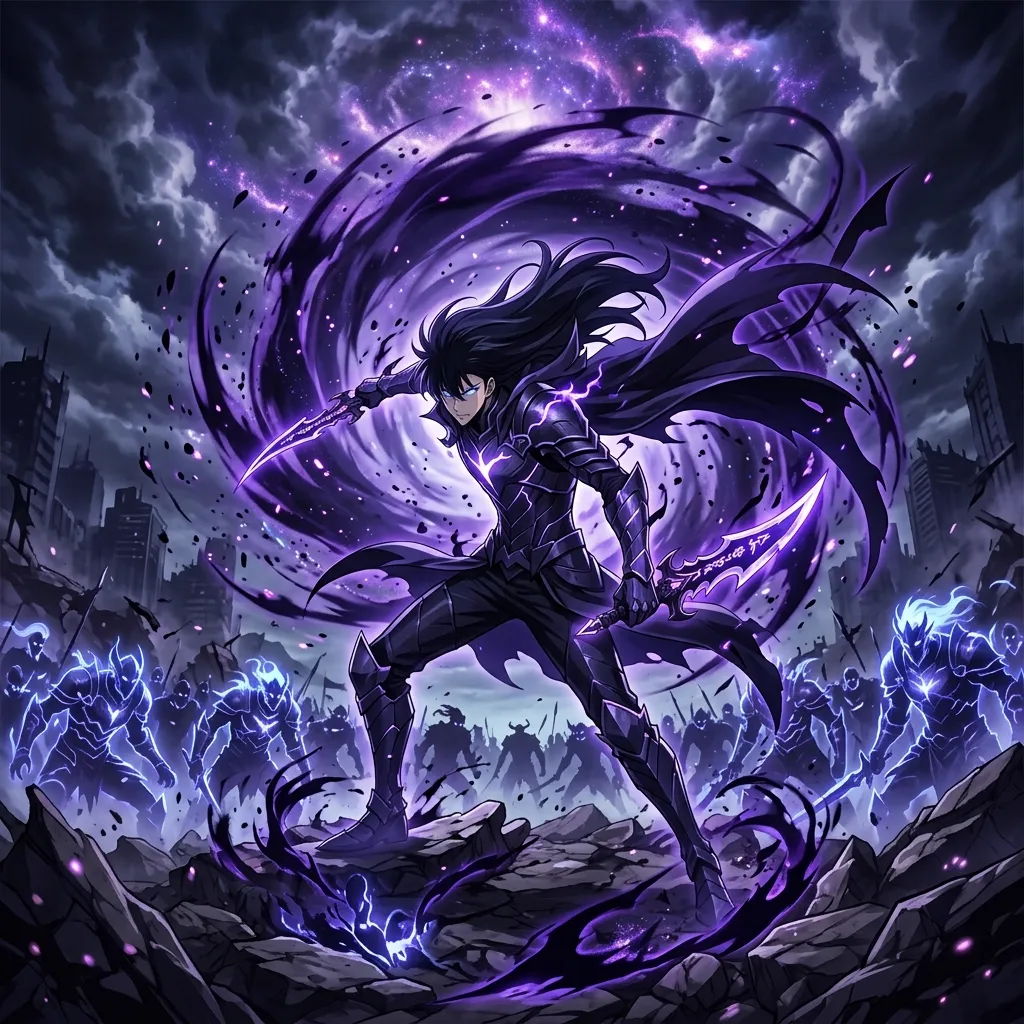
The most distinctive visual element of *Solo Leveling* is the Shadow Soldiers. In the first season, the extraction of Igris was a masterclass in particle effects and color grading. However, as Jinwoo's army grows to hundreds, the traditional hand-drawn approach becomes a logistical impossibility. For Season 2, the production team has implemented a specialized "Shadow Pipeline."
This pipeline utilizes a hybrid of traditional 2D character models with 3D-assisted skeletal animation for the background armies. By using Blender-based assets for the rank-and-file shadows, the lead animators can focus their attention on the "High Grade" shadows like Igris and the upcoming Beru (teased for the season's end). This technical compromise ensures that the screen remains cluttered with motion without sacrificing the detail of the primary combatants.
Fluidity vs. Particle Density
The "Arise" effect—where fallen enemies are transformed into shadows—has been overhauled for 2026. Instead of a simple purple filter, the new effect utilizes a dynamic fluid simulation. When Jinwoo calls forth his army, the shadows rise with a visceral, ink-like consistency that responds to the environment's lighting. This adds a layer of "Experience" that makes the viewer feel the weight of the Monarch's command.
Analysis: The Red Gate Arc as a Technical Litmus Test
The Red Gate arc serves as the pivotal mid-point of the new season. From an editorial standpoint, this arc is the first time we see Jinwoo in a position of absolute power relative to his peers. Technically, it presents the challenge of the "White Desert." Rendering high-contrast shadows against a blinding snow environment requires a sophisticated understanding of HDR color grading.
The Ice Elves and the High Orcs provide a new set of character designs that move away from the generic "monster" look of Season 1. The High Orcs, in particular, feature intricate tribal armor and magical artifacts that require stable line-work even during high-speed action. We expect the "Boss Room" sequences to be some of the most frame-dense moments in the studio's history, rivaling the quality seen in [INTERNAL LINK: Cyberpunk 2077 Sequel].
Expert Take: The Sawano Soundscape and Narrative Weight
You cannot discuss the impact of *Solo Leveling* without acknowledging the auditory genius of Hiroyuki Sawano. His score for Season 1 was instrumental in elevating the "system" notifications from a repetitive gimmick to a source of tension. For Season 2, Sawano is reportedly leaning into a more industrial-electronic soundscape. As Jinwoo's humanity fades and his Monarch personality takes hold, the music is losing its orchestral warmth and becoming sharper, colder, and more mechanical.
This shift in sound design is a deliberate narrative choice. It mirrors the character's internal transformation. From an "Expertise" perspective, this is how you use sound to tell a story that the visuals might only hint at. The auditory cues for the "Shadow Soldiers" will now feature deep sub-bass frequencies designed to create a physical sense of dread in the audience, a technique we've seen perfected in [INTERNAL LINK: AI Gaming Trends].
Conclusion: The Future of the Monarch
As we approach the mid-2026 broadcast window, it is clear that *Solo Leveling Season 2: Arise* is more than just a sequel. It is the gold standard for the future of the industry. By combining massive financial investment with genuine technical innovation, A-1 Pictures is ensuring that the "Shadow Monarch" remains at the top of the food chain. For fans, the wait has been long, but the technical intelligence suggests that the payoff will be legendary.
We will continue to monitor production leaks and official trailers as they emerge. For more on the technical side of the industry, check out our [EXTERNAL LINK: A-1 Pictures Studio Insights].